

Marquise Diamond Rings: Shape, Settings and Care
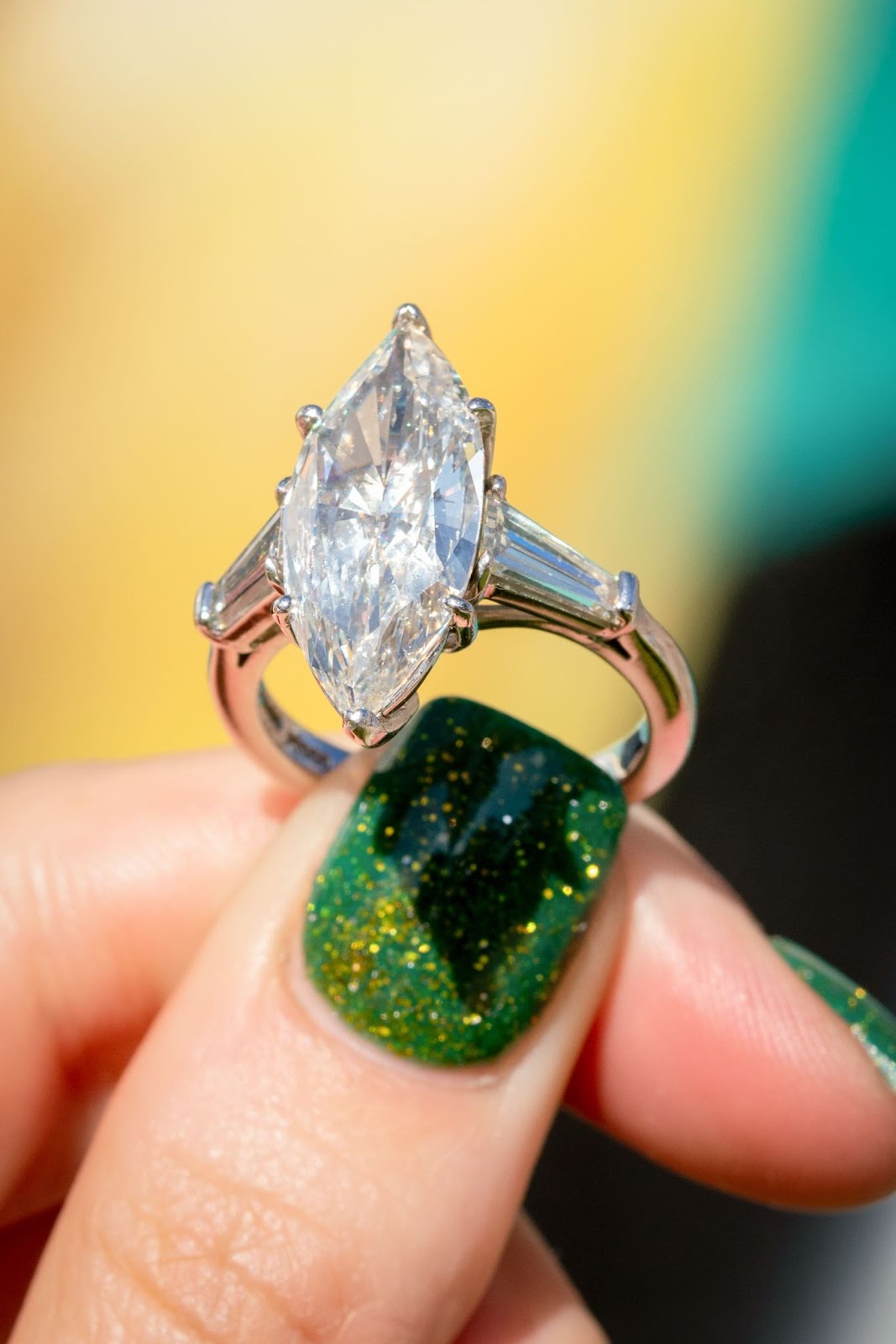
A marquise diamond has an elongated outline and a point at each end. Its shape can look quite different in a simple setting, with baguette side stones or inside a colored stone border. The photographs here show several ways to use that outline.
Look beyond carat weight
Compare the stone’s length, width and depth alongside its weight. Some marquise diamonds look slender and others fuller; there is no single proportion that everyone must prefer. View the stone moving in ordinary light and examine any dark area across the center.
GIA’s marquise diamond guide discusses shape and buying considerations. A report is useful, but the standard GIA overall cut grade for round brilliants should not be applied to a marquise.
Choose a setting for the way you wear it
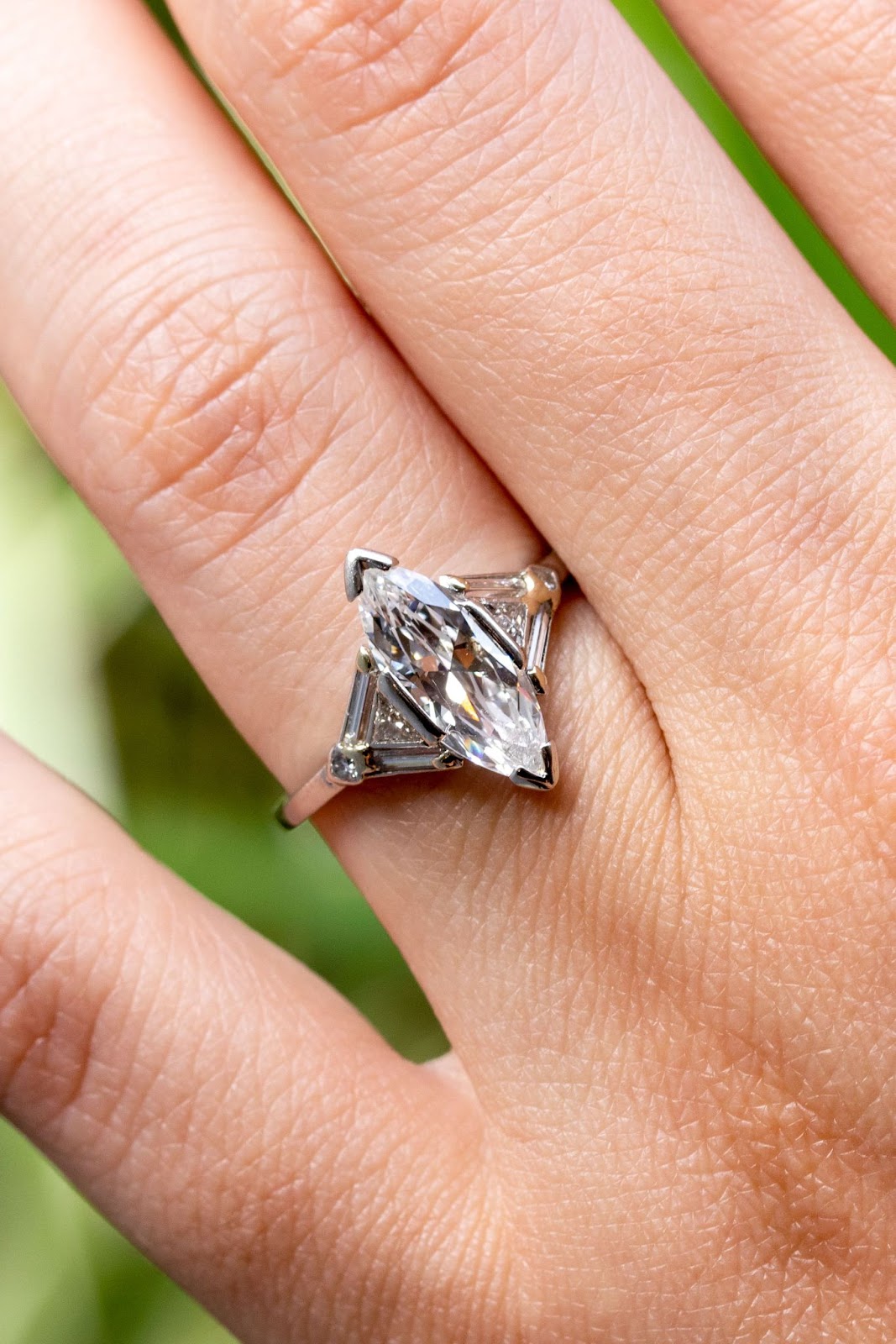
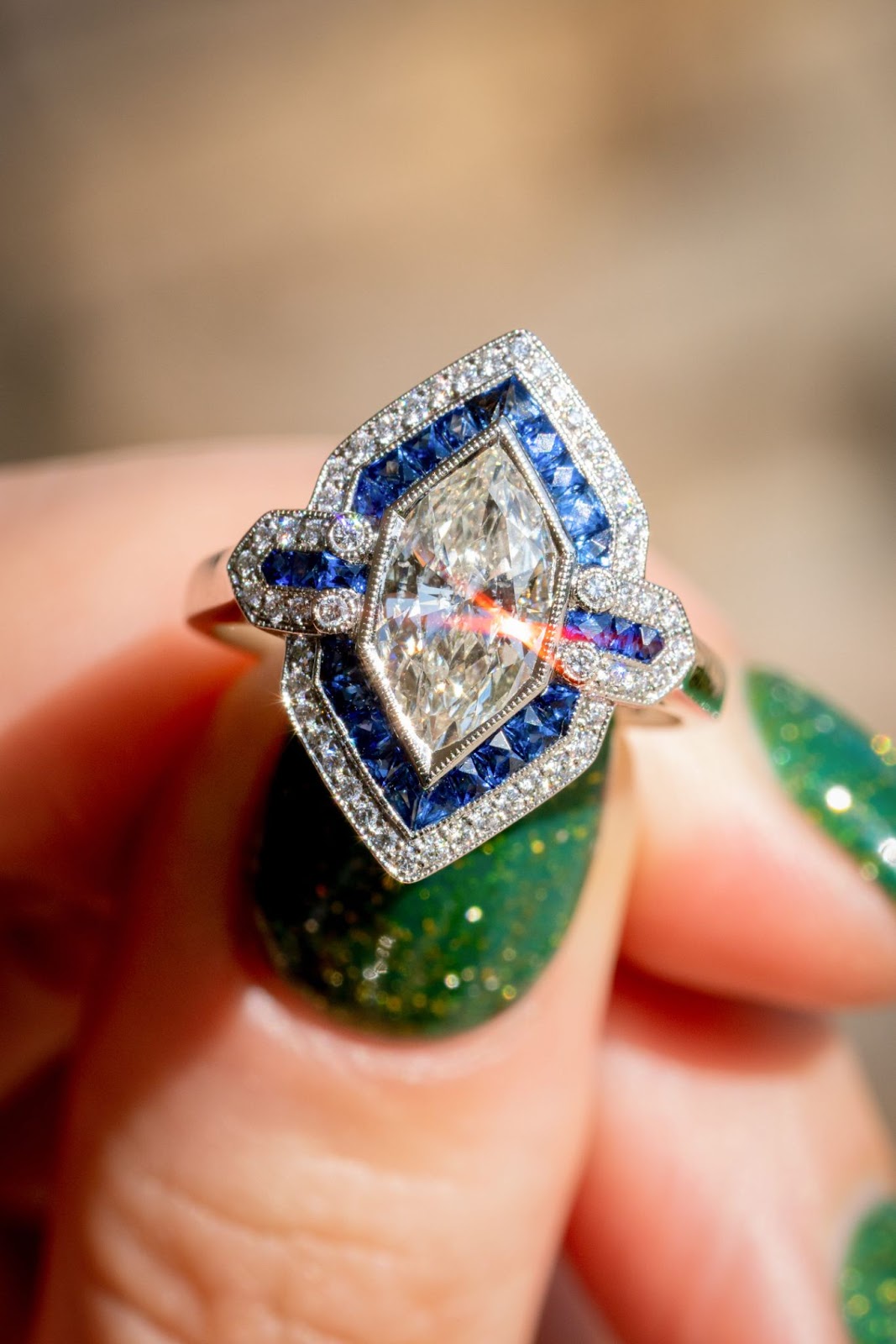
The first image has tapered baguette side stones. The next shows two marquise shaped stones positioned diagonally. The final ring surrounds a marquise center with blue accents and an outer diamond border.
A band with pavé or other small diamonds adds texture, but it also adds settings that need inspection. Check comfort, how the ring sits beside a wedding band and whether the setting catches on clothing.
Protect the points and small stones
The pointed ends need appropriate protection from the setting. Have the tips and prongs examined if the ring catches, moves in its mount or suffers an impact. Avoid wearing it for heavy work or activities likely to strike the stone.
Ask for cleaning instructions suited to every material in the ring. Loose stones, treatments and delicate settings can change what is appropriate. Keep it separate from other jewelry during storage.
Contact Diamonds by Raymond Lee in Boca Raton to discuss available marquise rings and their documented details. The retained images are archived design examples, not a guarantee of current stock.