

Pear Halo Engagement Rings: Shape, Setting and Fit
A pear halo engagement ring combines a pointed diamond outline with a border of smaller stones. The halo adds width and sparkle around the center, giving the ring a different presence from a plain solitaire. Choosing one starts with looking at the center diamond and the setting separately.

Look at the Pear Before the Halo
Compare the rounded end, shoulders and point for a balanced outline. View the stone while moving it in different lighting. Some pears show a dark area across the middle, often called a bow tie; decide whether its size and persistence distract from the rest of the diamond. GIA’s pear diamond guide explains these visual checks.
Carat weight describes weight, not the outline’s dimensions. Ask for the center stone’s measurements and its report, and keep center weight separate from the combined weight of the halo and band diamonds.
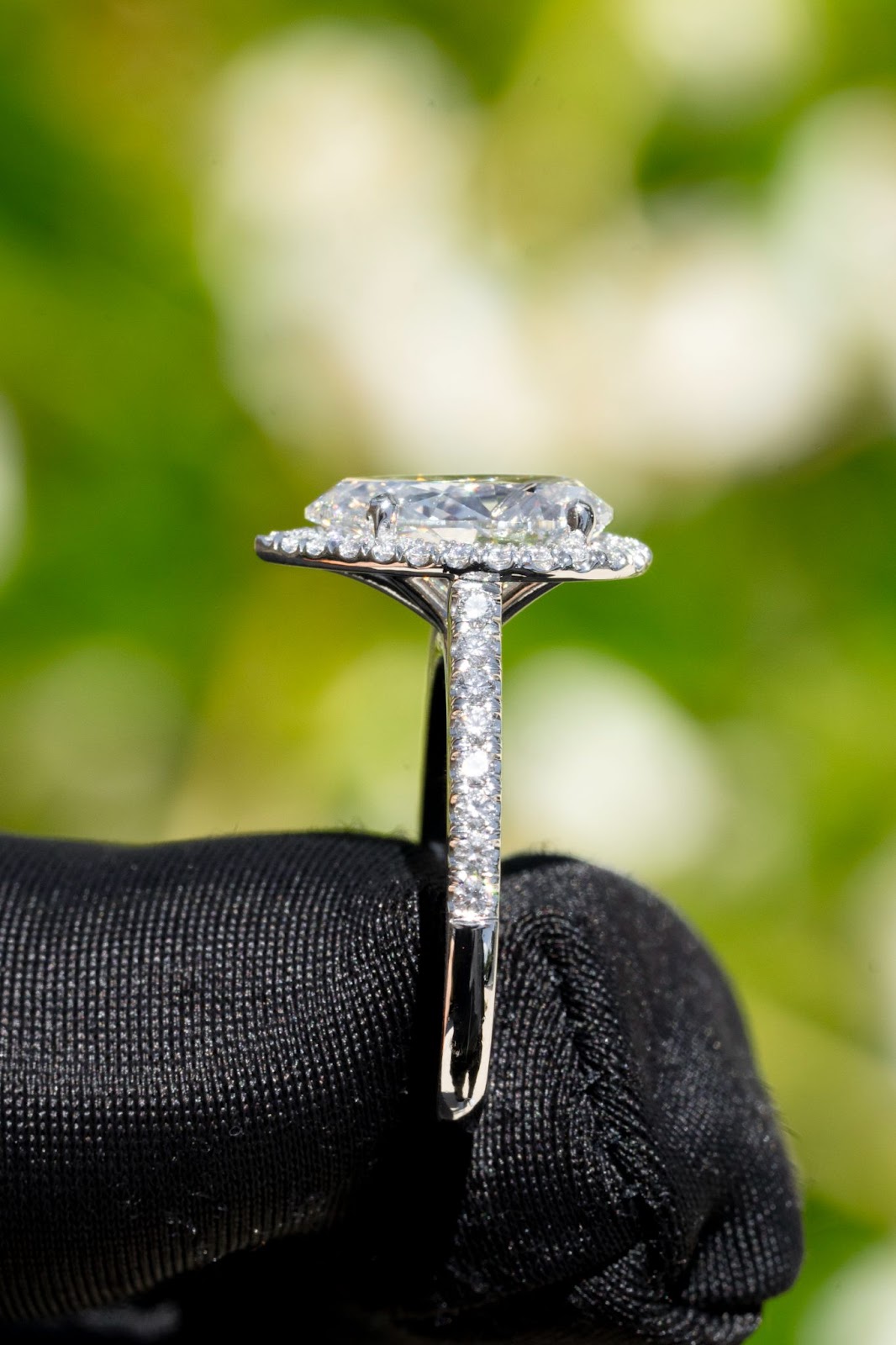
Check Protection and Daily Comfort
The pointed tip needs a suitable protective setting. A halo alone does not make a diamond immune to chips. Ask the jeweler to show you how the point is protected and how the small stones are secured. Run a finger gently around the finished setting to check for rough areas.
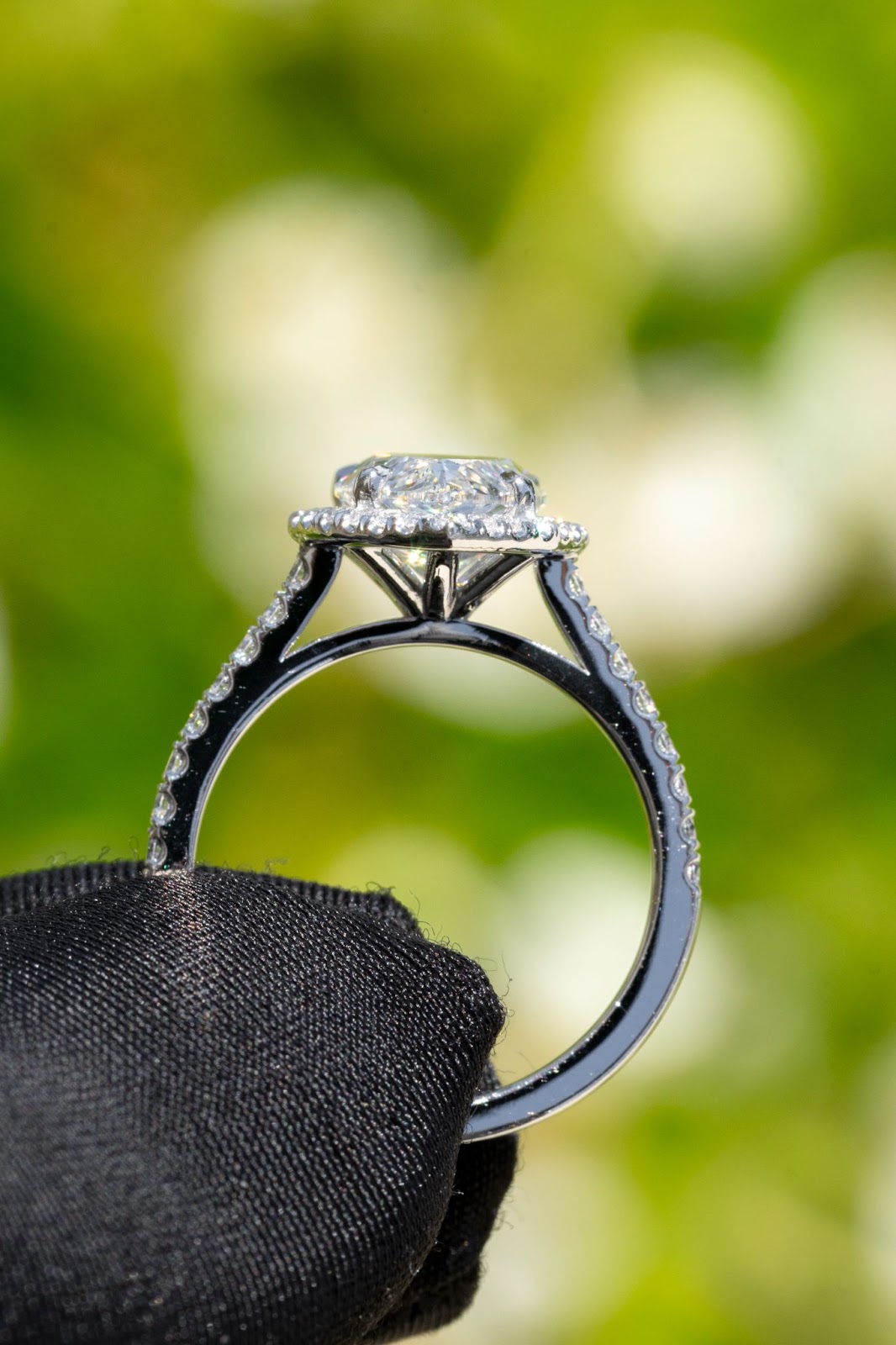
Try the ring beside the wedding band you intend to wear. The gallery beneath the center may leave a gap next to a straight band. A fitted band can be another option, but its shape should be checked against the actual engagement ring.
Compare Other Settings Too
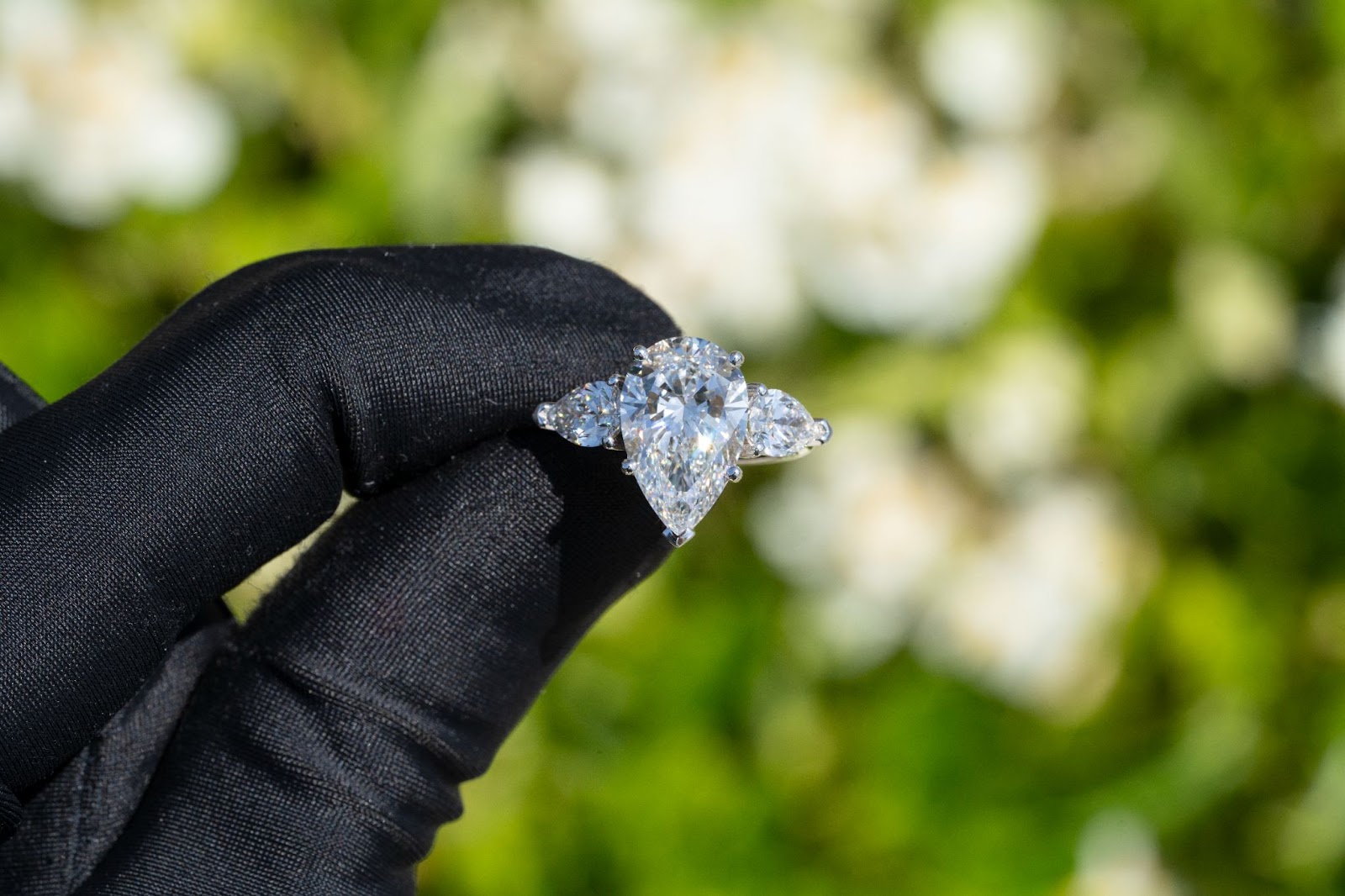
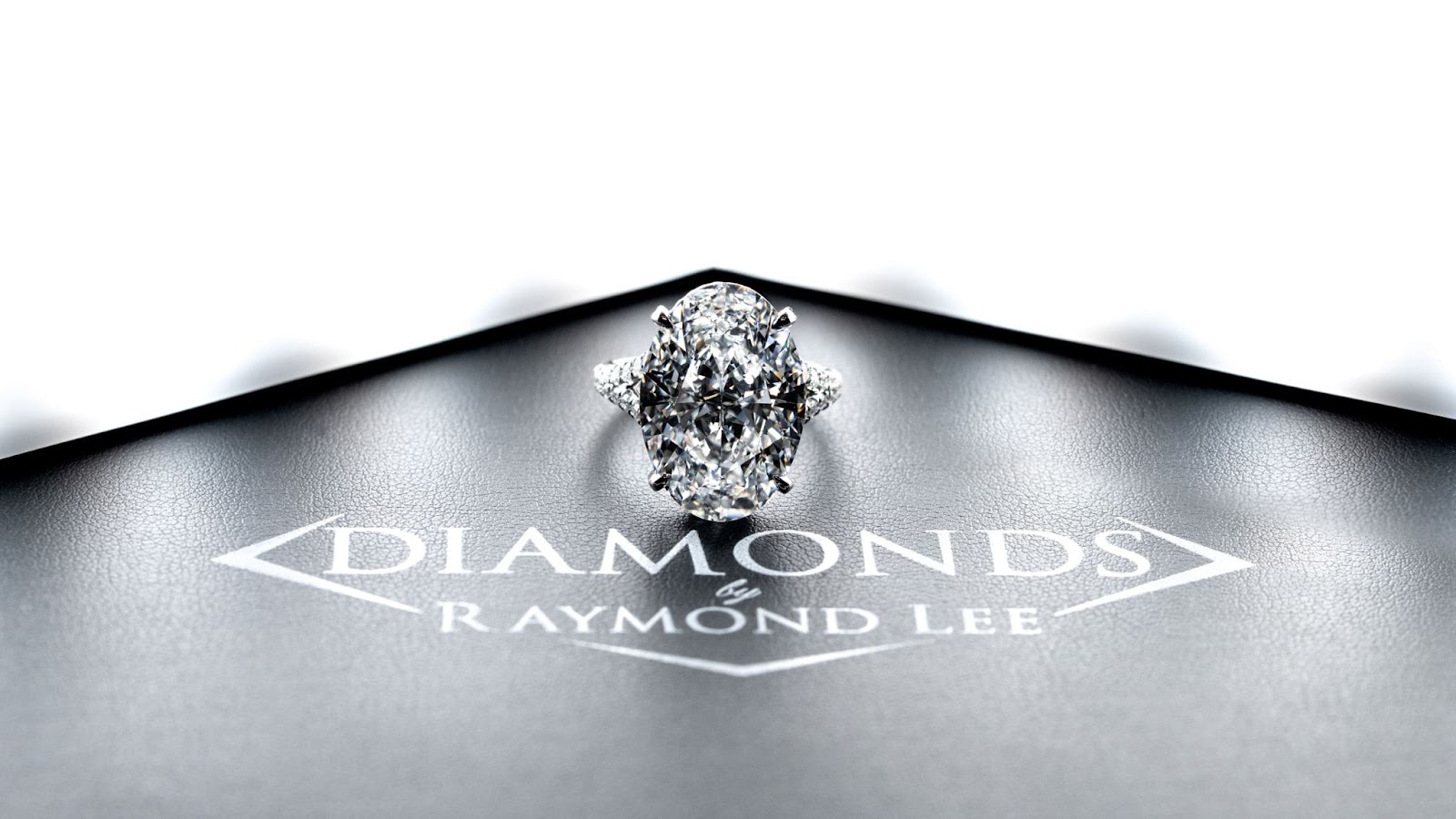
The next photograph shows a pear center with side stones rather than a halo. The final photograph shows an oval center. These examples help compare outlines and setting styles; they are not all pear halo rings.
Contact Diamonds by Raymond Lee to discuss your piece or arrange a visit to our Boca Raton showroom.