

Sapphire Ring Styles: Color, Settings and Care
Sapphire rings can put color at the center or use it to frame a diamond. The retained photographs show both approaches, from a large oval blue stone to a geometric border around a marquise center.
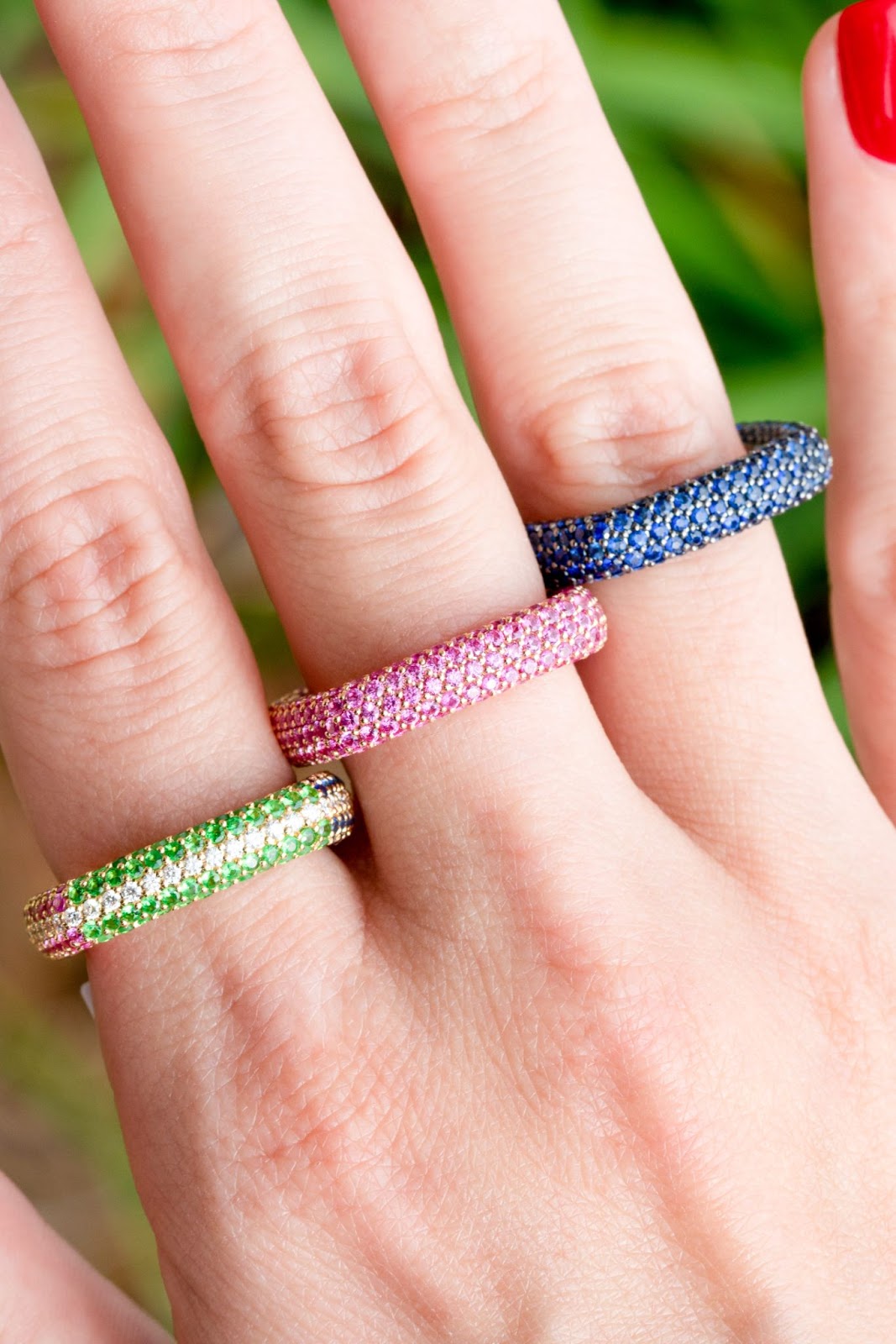
Choose the role of color
A broad center stone makes color the focus of the ring. A line of smaller stones can instead outline a diamond or add contrast to a band. The first photograph includes green, pink and blue bands; their colors alone do not identify every gemstone.
Look at a ring in more than one kind of light. A photograph can emphasize blue, deepen shadows or conceal a pale area, so ask for a video and a direct description of the stone.
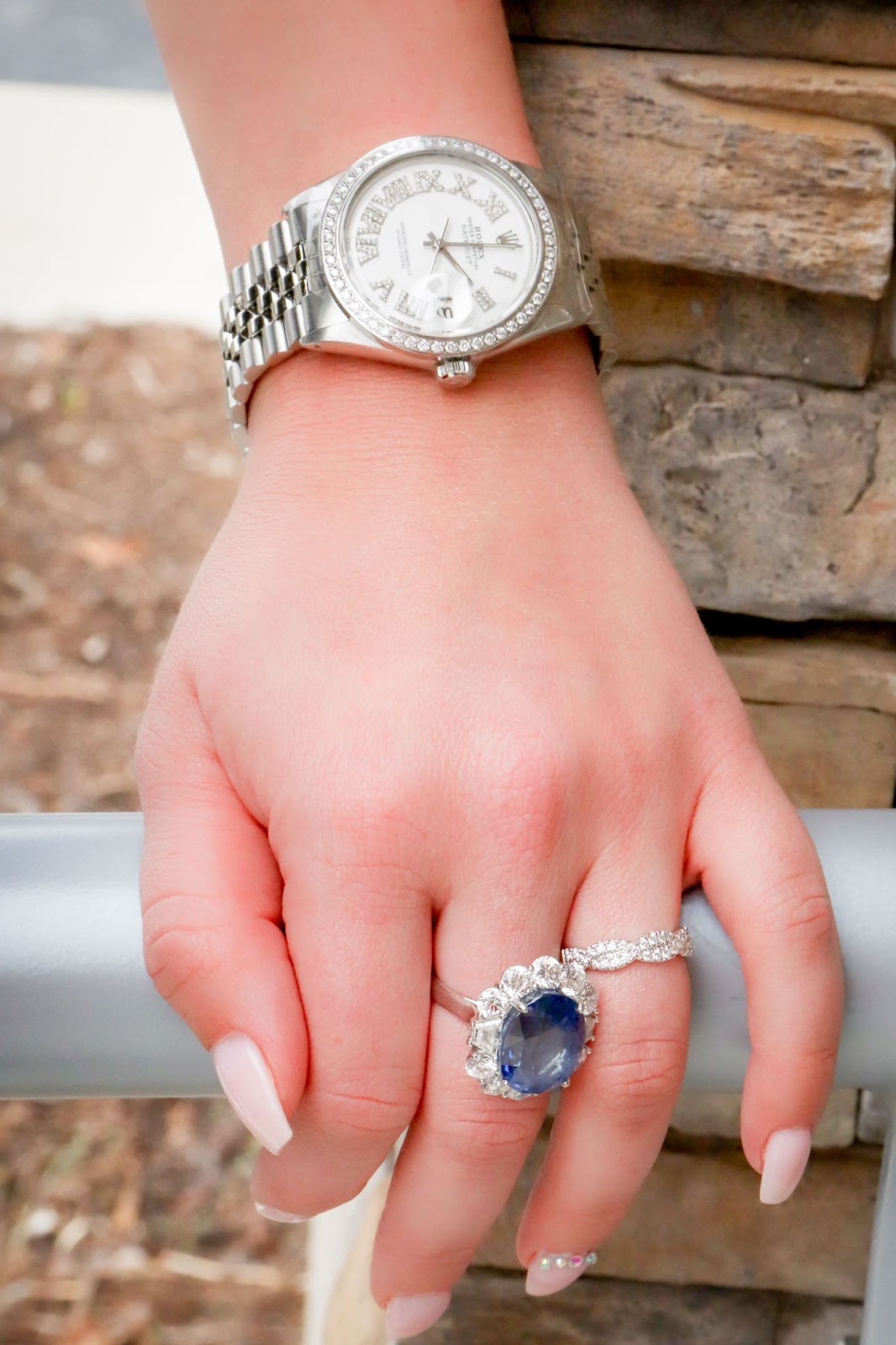
Compare the settings
The oval halo ring and scalloped design below create different outlines on the hand. In the scalloped ring, blue accents sit around a round center, with smaller clear stones forming the outer edge.
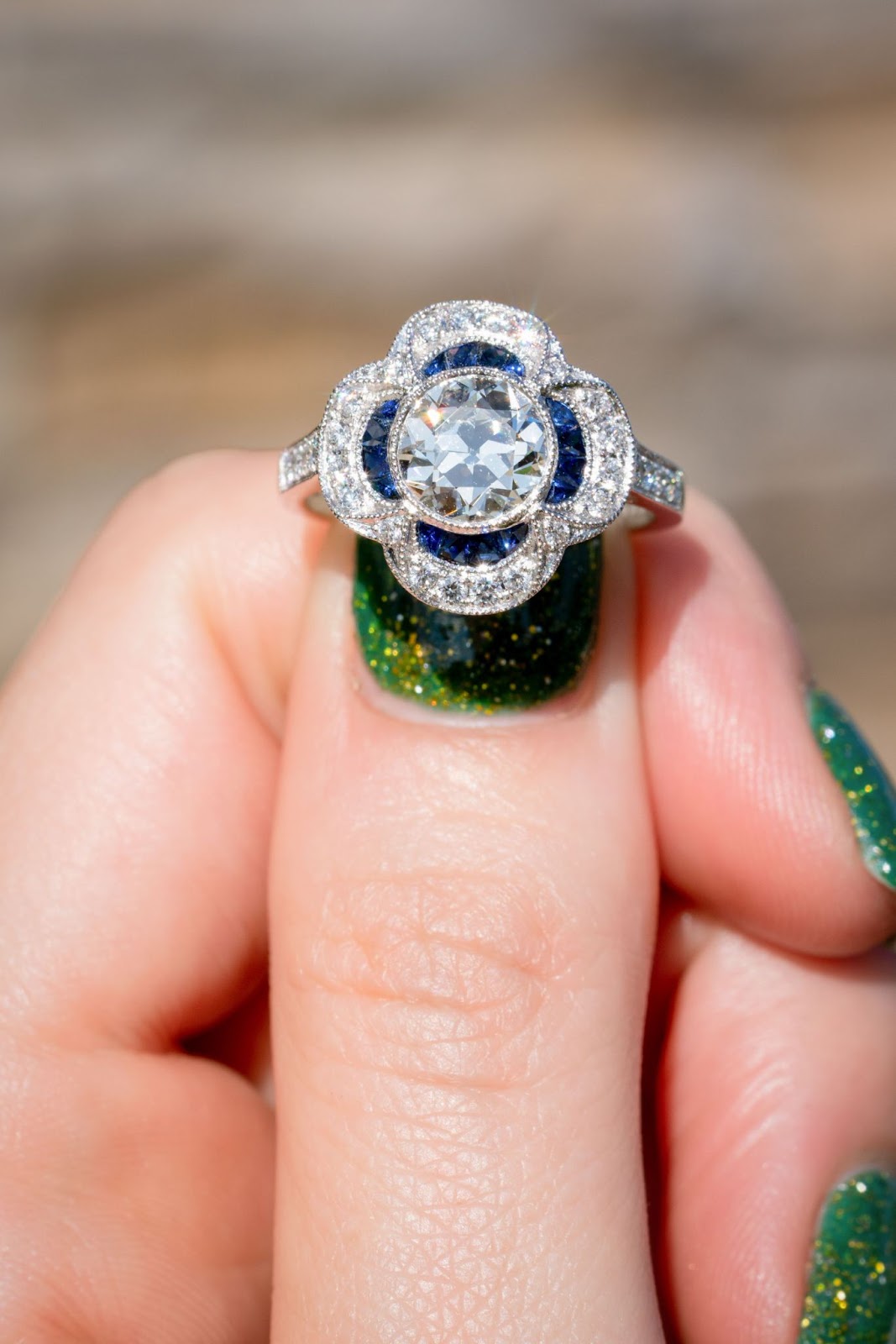
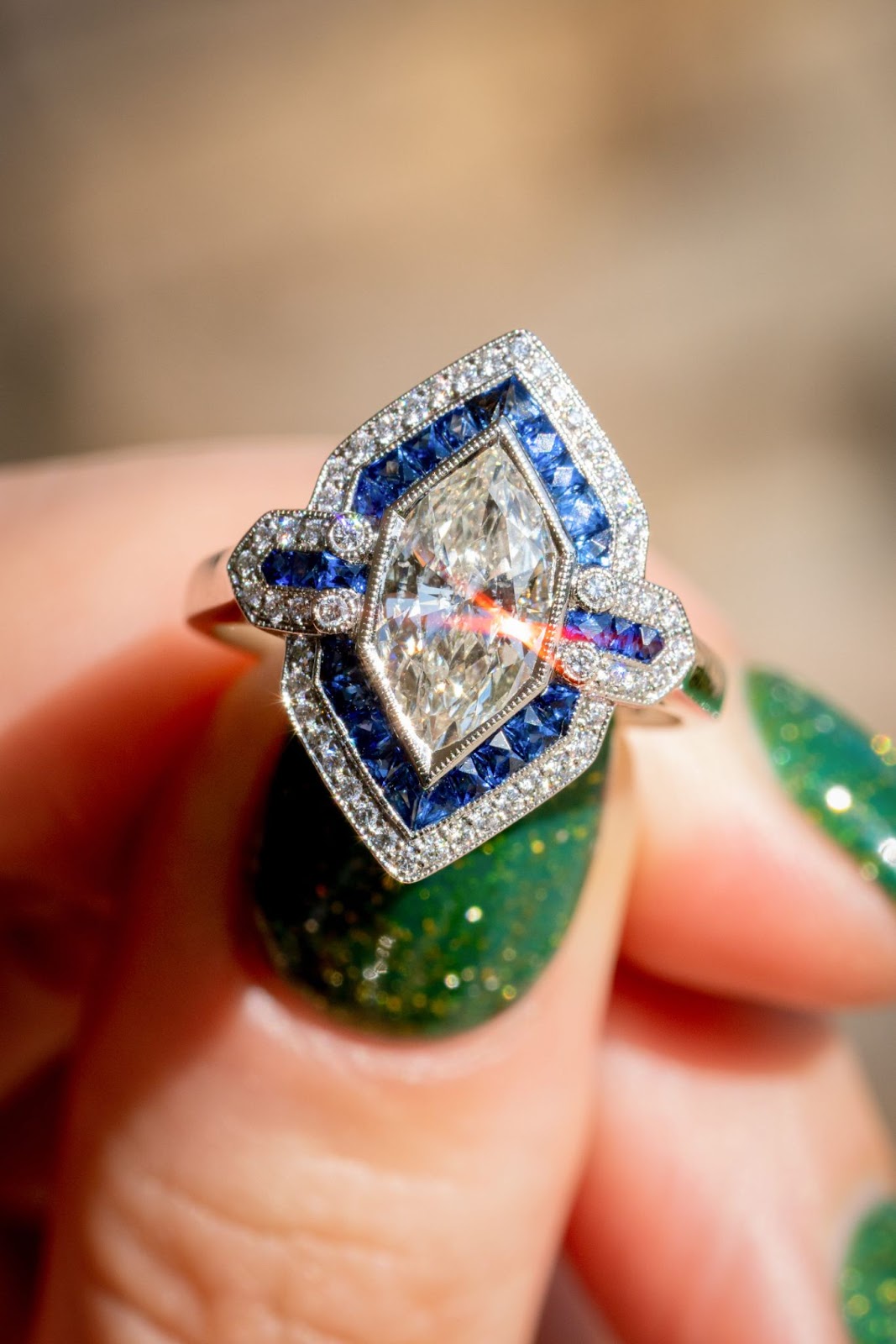
The showroom photograph is retained from the original gallery. The following marquise design uses a more angular blue border. Its long shape gives a different effect from the oval blue center with clustered shoulder stones shown afterward.

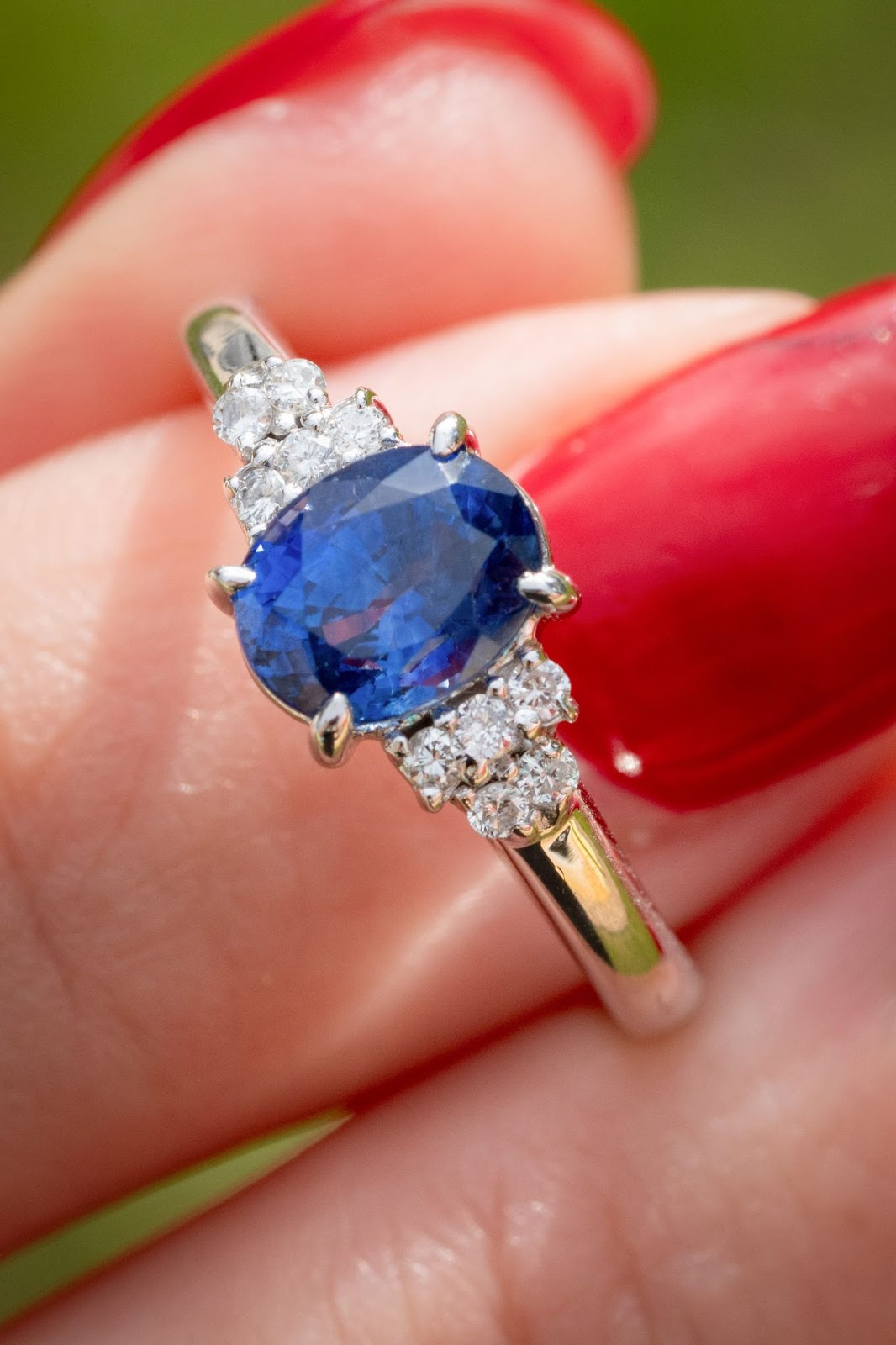
Confirm the stone details
Ask whether a sapphire is natural or laboratory grown and what treatments are disclosed. Request a report where appropriate, and distinguish the center weight from total gemstone and diamond weights. Color alone cannot prove origin, treatment or quality.
This gallery focuses on the designs. For a ring you want to buy, request its individual measurements, weights and any available laboratory report.
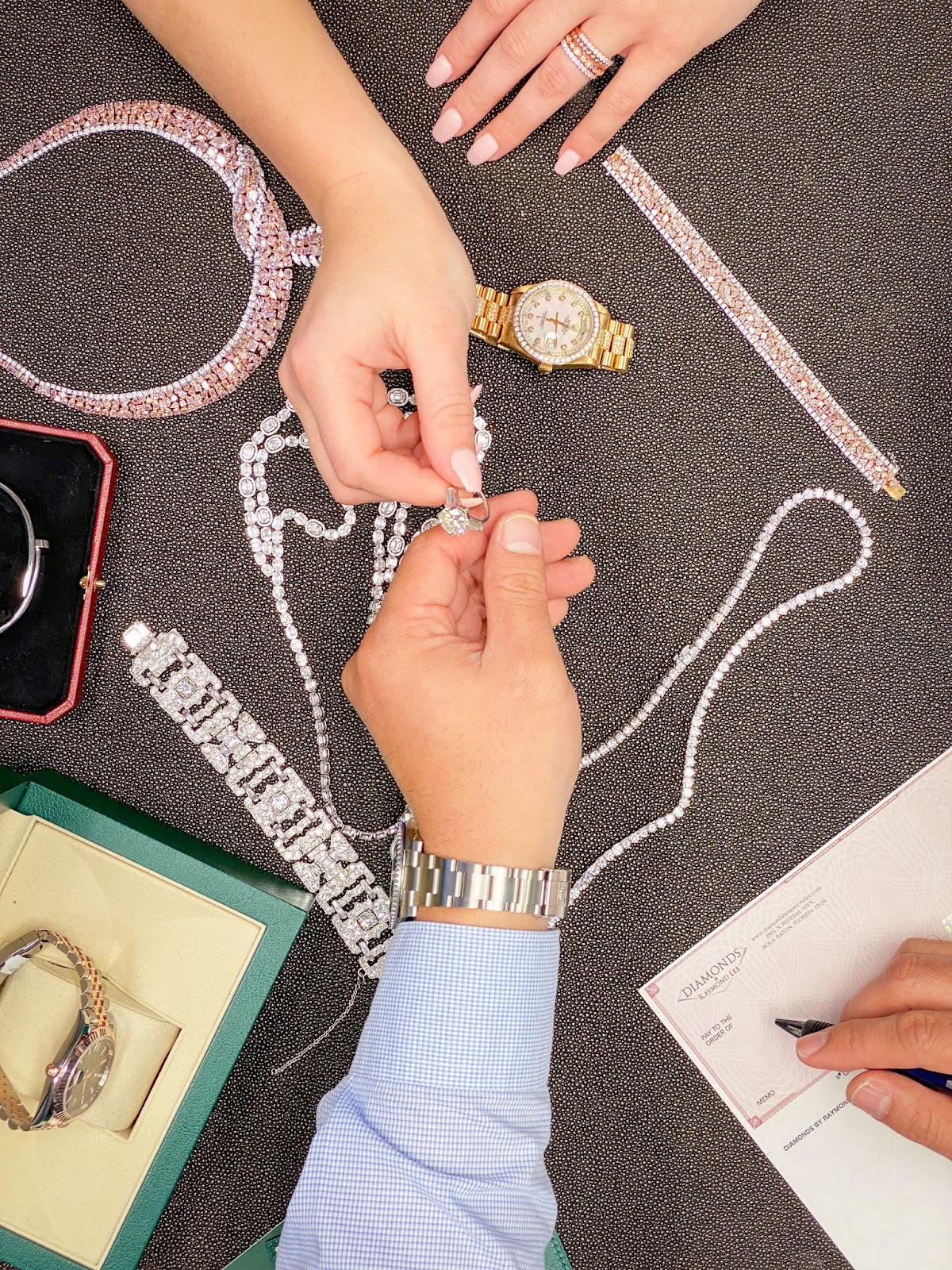
Care depends on the stone and setting
Sapphire resists scratching well, but it can still chip. Treatments and the condition of the mount affect cleaning choices. GIA’s sapphire care guide explains why those details matter. Have loose stones checked before cleaning or further wear.
Contact Diamonds by Raymond Lee about sapphire rings to review current availability and documented details. These photographs are archived examples.